



News
Morocco Expands Water Infrastructure to Address Growing Climate Challenges


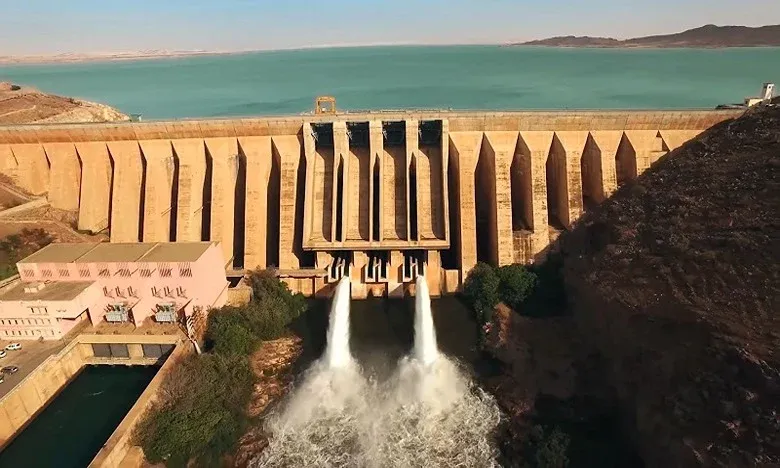
Morocco is advancing towards a more integrated and sustainable water management system, combining major infrastructure investments, desalination and improved water resource management. As the country continues to face increasing pressure on its water resources, current efforts aim to strengthen water security, improve resource distribution and build long-term resilience to climate change.
The National Programme for Drinking Water Supply and Irrigation (PNAEPI) 2020–2027, with a budget that has reached 143 billion dirhams, has finished nine of the 19 planned major dams, adding approximately 2 billion m³ of water storage capacity. Complementary investments also include 155 small dams and four medium-sized dams to improve water availability at the local level.
In parallel, inter-basin water transfers are contributing to more coordinated water resource management. Between September 2023 and December 2025, the Sebou-Bouregreg project transferred nearly 950 million m³ of water, helping secure supplies along the Rabat-Casablanca corridor.
At the same time, desalination has become an important part of Morocco's water strategy. In 2026, national desalination capacity reached approximately 420 million m³ per year, with plans to increase it to 1.7 billion m³ annually by 2030. In the Souss-Massa region, desalination is being combined with improved irrigation efficiency and groundwater protection. However, further development will require careful consideration of energy consumption, renewable energy integration and brine management.
Beyond conventional infrastructure, Morocco has opportunities to strengthen circular water management through treated wastewater reuse. Regions such as Marrakech-Safi and Tangier-Tetouan-Al Hoceima could develop local reuse systems for agricultural, industrial and urban applications, reducing pressure on freshwater resources.
Nature-Based Solutions: A Path Towards Climate-Resilient Water Management
Improving rainwater management is another important challenge, particularly in Gharb-Loukkos and northern Morocco, where intense rainfall and flooding can be followed by prolonged droughts. In these regions, nature-based solutions, such as wetland restoration, vegetated swales, floodable parks and infiltration systems, could complement conventional infrastructure by reducing flood risks, improving water retention and supporting groundwater recharge.
Looking ahead, Morocco's next challenge is to complement its infrastructure investments with locally adapted solutions that improve water efficiency, resource reuse and resilience to droughts and floods.
Document available here :