


SEMIDE took part in the 1st International Nature-based Solutions Congress, held at the at the CNIT Forest and the Climate Academy from November 2 to 6, 2026, in Paris, France. The Congress comprised two main events—the Scientific Conference and NetworkNature Week, in both of which SEMIDE actively participated.
SEMIDE at the NetworkNature Week
SEMIDE took part in the session “Ambition to Action! - Enabling Nature Restoration in Cities” organised during the Cities Festival on November 4, 2026 in the Climate Academy. SEMIDE, jointly with NTUA and Région Sud facilitated Table 3 “From Targets to Action: Implementation & Monitoring” oraganised by CARDIMED & UNP+. The table explored critical questions around measurement metrics and the challenges of implementing politically agreed targets of NRR that may be technically unfeasible at the local scale (NRPs).
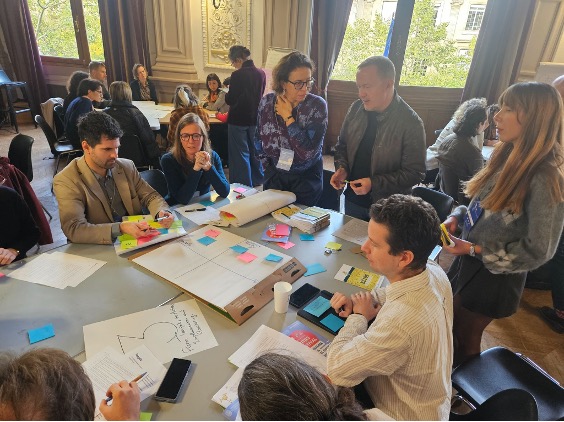
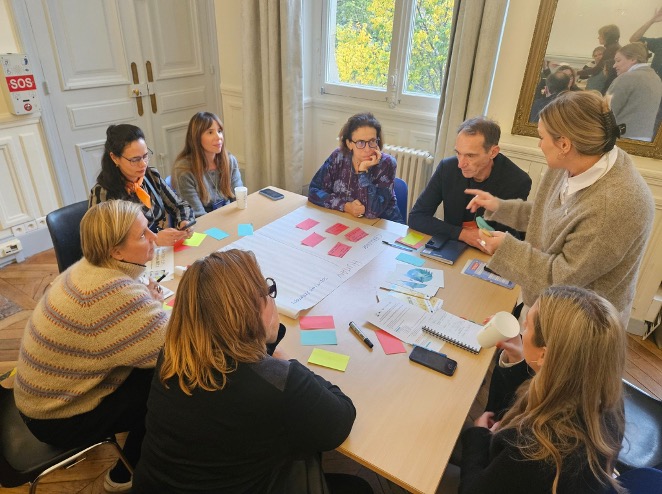
SEMIDE at national NBS Hubs meeting
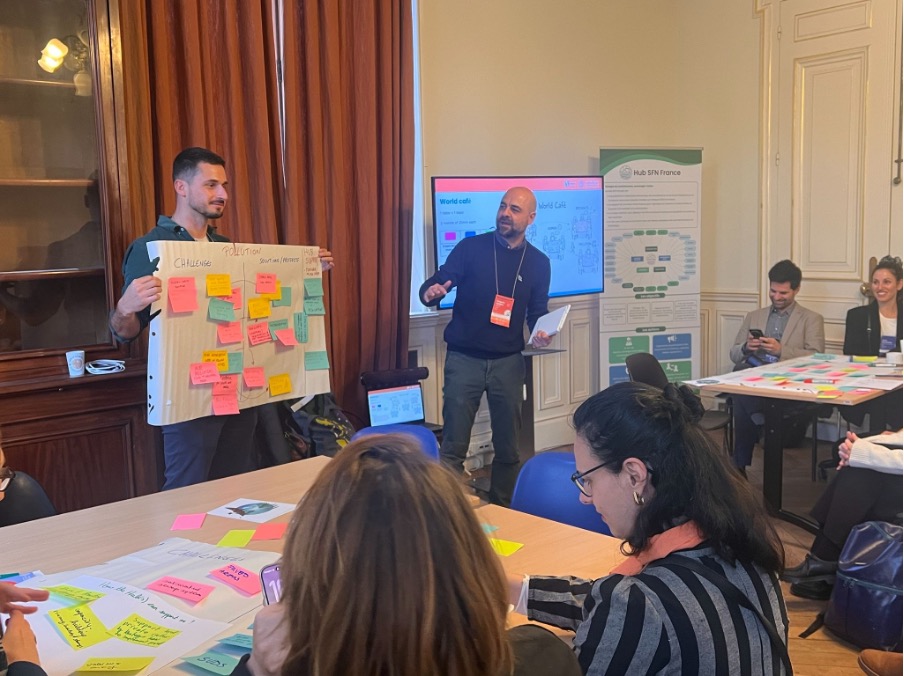
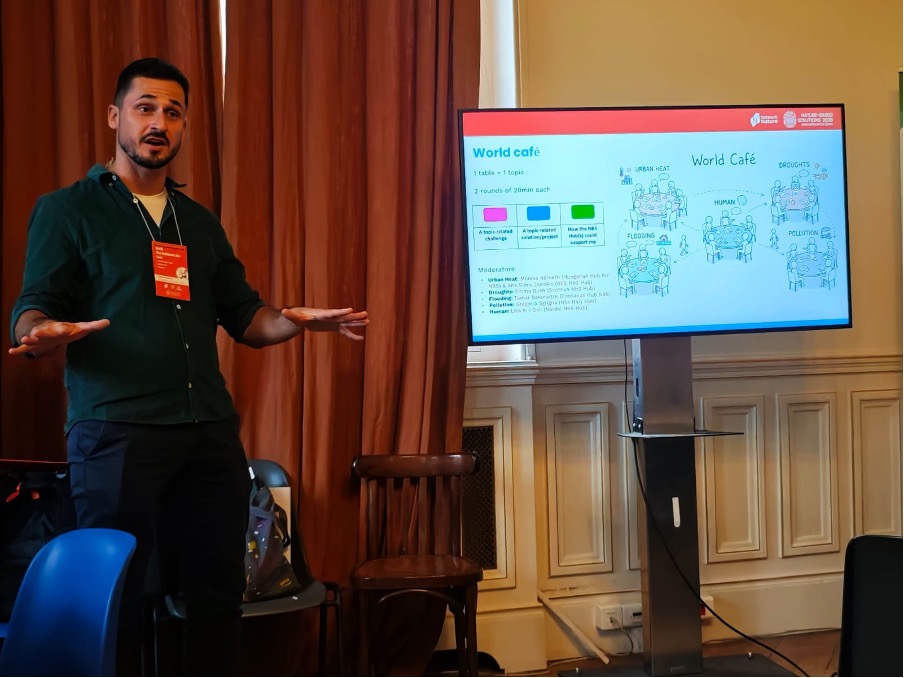
SEMIDE was also present at Network Nature Week as a co-leader of the French NBS Hub. This event provided an opportunity to meet the other European national hubs and discuss how each one operates, both to draw inspiration from one another and to consider strategies for joint action.
A workshop was therefore organised and facilitated by SEMIDE, in collaboration with the other hubs, to engage with the local authorities and municipalities present on the environmental challenges they face, to offer them food for thought and potential solutions, and to gather their feedback on how they would like the hub to support them.
This opportunity for discussion highlighted a significant need for the hubs to share their expertise with local authorities, the need for decision-making support, and also for training materials for both technical teams and decision-makers.
SEMIDE at the Scientific Conference
Organised by the French National Research Program on Nature-based Solutions (SOLU-BIOD) and NetworkNature, in collaboration with UNP+, Biodiversa+, Sorbonne University, and the City of Paris, the congress brought together more than 500 researchers, policymakers, practitioners, and communities shaping the future of NbS in Europe and beyond.
As the networking lead for CARDIMED, SEMIDE hosted the symposium session titled
“Reconnecting cities and peri-urban areas with nature: the role of Nature-based Solutions (NbS)”. The session was collaboratively prepared with NTUA (CARDIMED), OIEAU (NATALIE project), ART-ER (ARCADIA project), and CMCC (DesirMed) under the NBS4EU cluster.
Out of more than 50 submissions evaluated by SEMIDE, NTUA, OIEAU, and CMCC, selected speakers shared insights on how NbS provide promising pathways to reconnect cities with nature while tackling climate change, biodiversity loss, and rising public health challenges across Europe.
Featured speakers—including Canto Moniz Gonçalo (Centre for Social Studies, Department of Architecture, Portugal), Jesús Soler (Veolia Spain, NATALIE project), Sotiria Baki (NTUA, NATALIE project), Slaveya Petrova and Ekaterina Valcheva (ARCADIA project), Fabio Masi (IRIDRA, CARDIMED), Lola Czuckermand (Aix-Marseille University, CARDIMED), Kaidi Tamm (Stockholm Environment Institute Tallinn Centre), and Juliette Brendlé-Nicolas (Université Claude Bernard Lyon 1, CNRS, INRAE, VetAgro Sup)—explored how cities can effectively implement the Nature Restoration Regulation (NRR) by fostering cross-disciplinary dialogue, advancing holistic perspectives, and delivering actionable ideas for practitioners and policymakers.
Engaging discussions during the Q&A sessions highlighted several key takeaways:
- Implementing Nature-based Solutions contributes to the targets of Nature Restoration Regulations; however, this does not automatically guarantee a qualitative improvement in habitats or the provision of ecosystem services.
- While NbS deliver clear human health and well-being benefits, social and ecological observations remain incompletely aligned. Notably, implementing NbS near universities generates substantial empirical evidence by facilitating access for researchers through ongoing study and observation.
- To maximize these benefits, policymakers should prioritize existing urban green spaces over the creation of new ones whenever possible.
- Because human perception plays a critical role in policymaking, monitoring social justice and public perception in urban greening initiatives is just as important as ecological assessment. Consequently, social infrastructure is every bit as critical as ecological infrastructure. For instance, urban greening must account for essential side-amenities (such as public restrooms in urban parks to ensure inclusive use), particularly for elderly populations.
- Finally, municipalities often lack adequate resources and institutional capacity for effective stakeholder engagement, highlighting the need for scaled support.